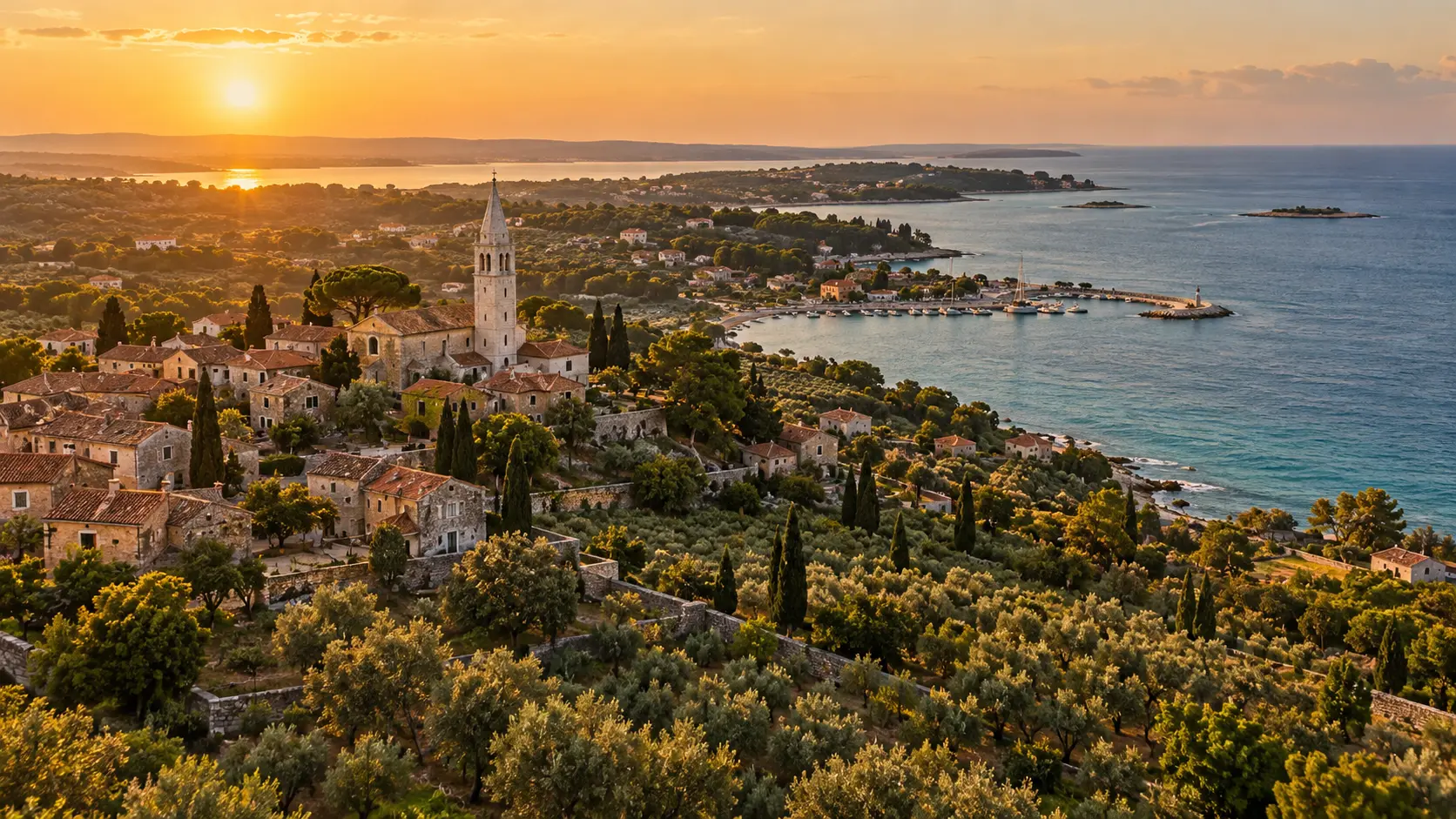
Conceptual view of an Istrian stone village, olive groves and the Adriatic coast at sunset

Western Istria · Croatia

Two villages. One Adriatic rhythm.

45.300° N · 13.633° E

A place between

Where the olive groves remember the sea.

Tar and Vabriga are close enough to share a horizon, yet each keeps its own tempo. Tar rises around the bell tower of St Martin. Vabriga leans toward gardens, old stone houses and the fishing coast below.

The story continues through Frata, Gedići, Perci and Rošini, across fertile red earth, pine-framed coves and the working harbour of Santa Marina. This is not Istria reduced to a checklist. It is a place to taste, walk and understand slowly.

6living settlements
≈ 7 kmnorth of Poreč
HR · ITa bilingual local identity

Four chapters

A small territory with more than one centre.

The destination unfolds from village squares to a working waterfront, from Roman traces to pine-shaded coves.

Hilltop village

A stone silhouette above the fields

Tar gathers around St Martin’s bell tower, with lanes that open toward olive groves and the western Istrian horizon. Begin here before the day warms and let the village set the pace.

Begin in the old centre · early morning Read the guide
Salt & gold

Salt on the table. Gold in the glass.

Here, flavour is geography: olives from red soil, fish from a working bay, herbs from stone-edged fields and Malvazija poured without ceremony.

Olive oil, the landscape made liquid

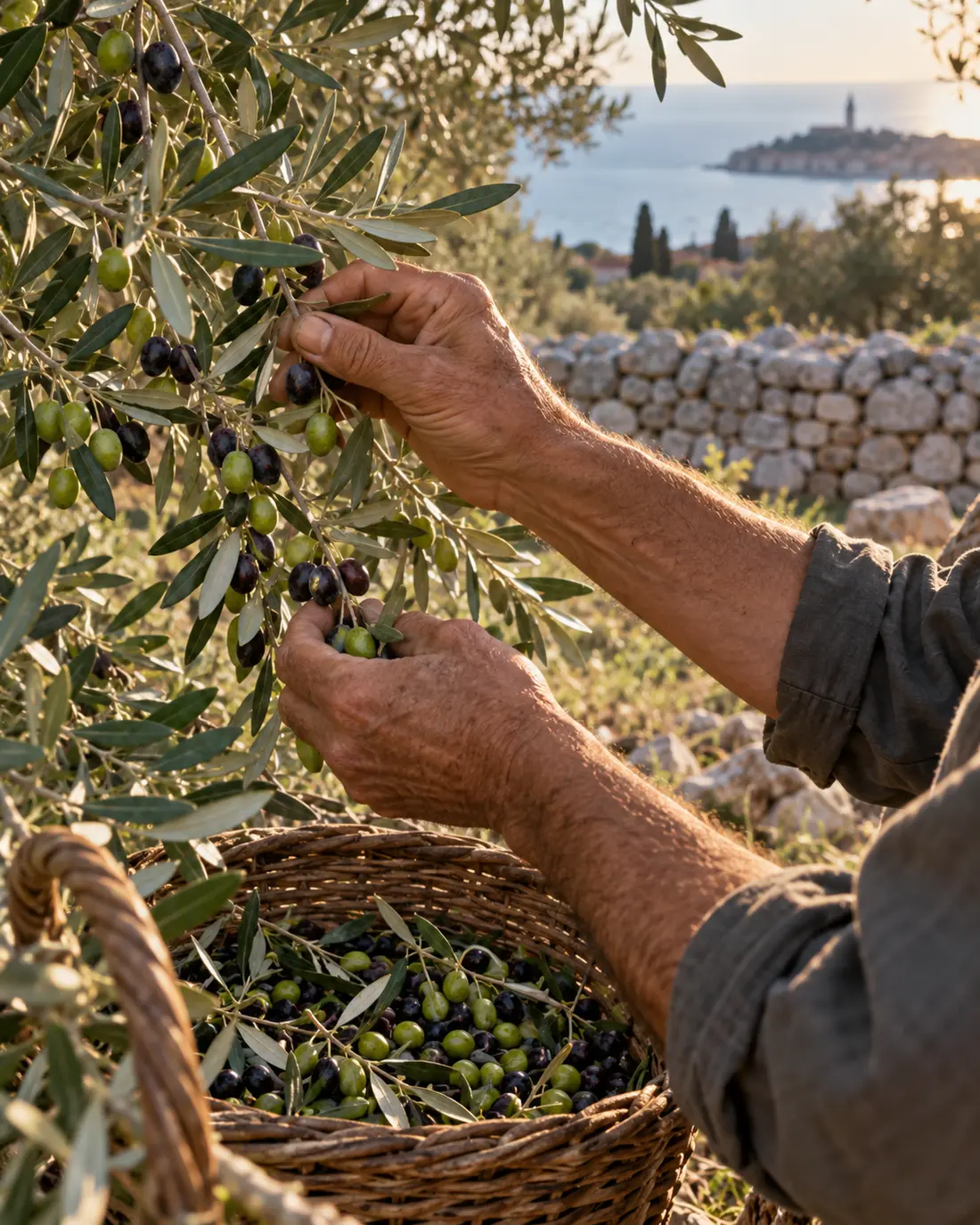
Olive growing has shaped local livelihoods since antiquity. A tasting is most revealing when it connects grove, harvest, mill and kitchen — not just the bottle.

From Santa Marina to the table

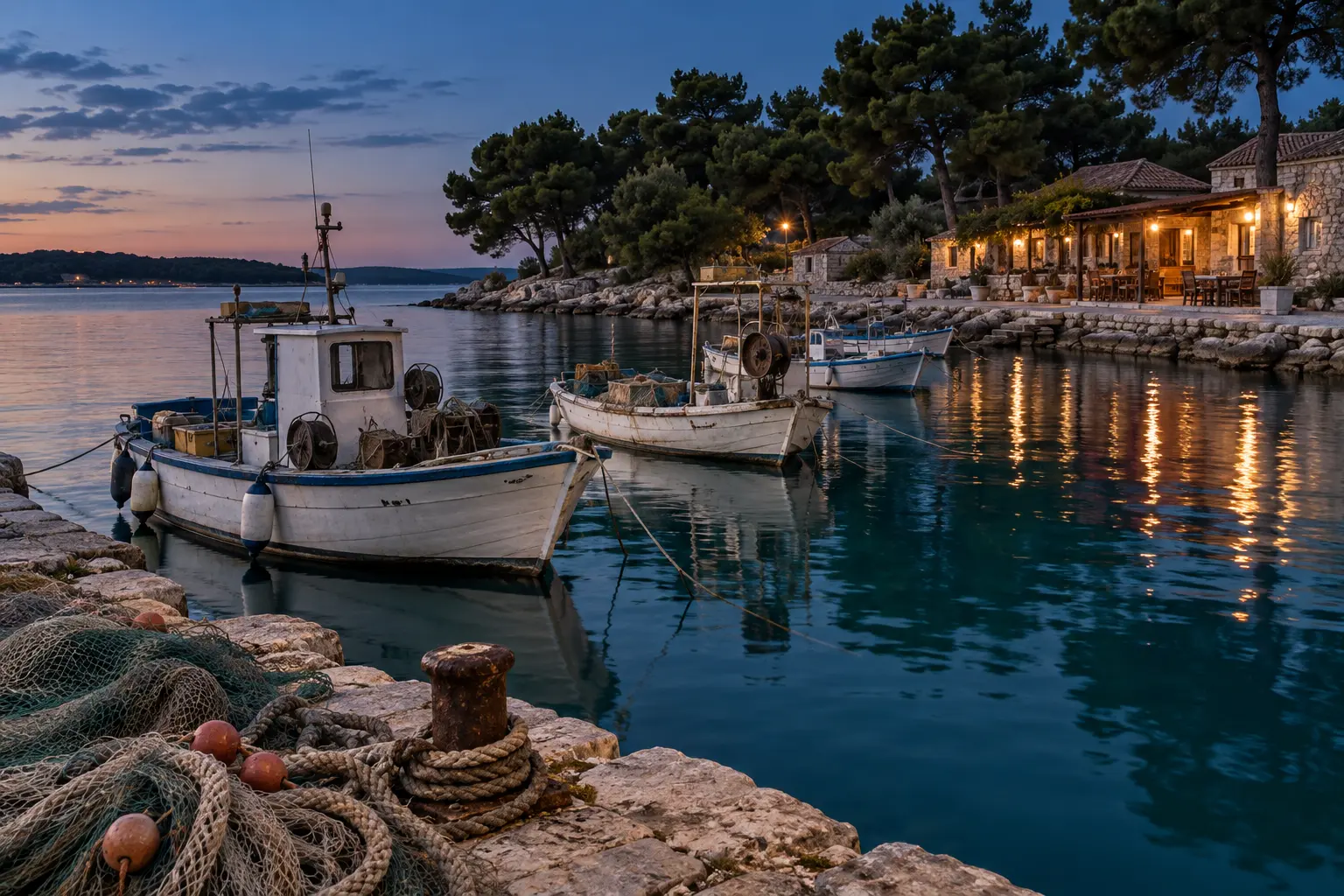
Ask what was landed, not what is fashionable. Grilled fish, shellfish, seasonal vegetables and a simple glass of local wine are the shortest route into the destination.

Olives being hand-picked in an Istrian grove Small working fishing boats in a calm Istrian harbour at blue hour Concept imagery · local stories should lead the final photography

One unhurried day

Follow the light, not a checklist.

A simple route links the villages to the coast without trying to consume the destination in a hurry.

Tar wakes

Coffee near the old centre, St Martin’s bell tower in the morning light and a first walk before the lanes become warm.

Taste the grove

Meet a local producer or arrange an olive-oil tasting. Learn to notice freshness, bitterness and the peppery finish.

Coast in the shade

Cycle or drive toward Lanterna. Choose a rocky cove, swim, then remain under the pines longer than planned.

Santa Marina

End by the working harbour. Order with the day’s catch in mind and stay for the change from blue hour to night.

The year, properly lived

Four reasons not to come only in August.

01

Spring

Wild herbs, clear cycling weather and villages returning outdoors. The landscape is green, generous and easy to explore.

02

Summer

Swim early, pause at midday and return to the coast when the heat softens. Let the villages carry the quieter hours.

03

Autumn

Olive harvest, young oil, mushrooms and longer dinners. This is the season when the territory explains itself best.

04

Winter

A stripped-back coast, local conversations and the honest rhythm of a place that exists beyond the visitor season.

Know before you go

Come curious. Leave the place intact.

Tar-Vabriga is compact, but its character lies in the spaces between village, grove and coast. Move slowly and verify seasonal services before setting out.

Setting
Western Istria, approximately 7 km north of Poreč, within easy reach of Novigrad.
Local names
Tar–Torre and Vabriga–Abrega reflect the area’s Croatian and Italian identity.
Moving around
A bicycle or car makes the villages, olive roads and coast easy to connect. Walk locally where roads and weather allow.
Respect
Santa Marina is a working harbour. Groves, fields and stone paths may cross private or productive land.
Official contact
Tourist Board Tar–Vabriga · Istarska 8/A, 52465 Tar · +385 52 443 250

Useful answers

What is Tar-Vabriga best known for?

For its olive-oil tradition, stone villages, fishing heritage around Santa Marina and the clear coastline of the Lanterna peninsula.

Does Tar-Vabriga have beaches?

Yes. The coast around Lanterna and Santa Marina offers mostly rocky and pebble bathing places with clear water and pine shade. Conditions and access vary, so check local guidance.

When is the best time to visit?

Late spring and early autumn offer warm days, quieter roads and a strong connection to food and landscape. Summer is best approached early and late in the day.

Is Tar-Vabriga one town?

It is a municipality named for Tar and Vabriga and composed of six settlements: Tar, Vabriga, Frata, Gedići, Perci and Rošini.

Official visitor information

Make room for the unexpected.

Use this story as a beginning. For current events, opening times, seasonal transport and local recommendations, contact the destination team.